Sulawesi cave paintings face damage risk from wildfire heat and smoke
A firefighter said flames reached within 800m of a Maros-Pangkep cave, while more than 270 hectares of the surrounding national park burned.
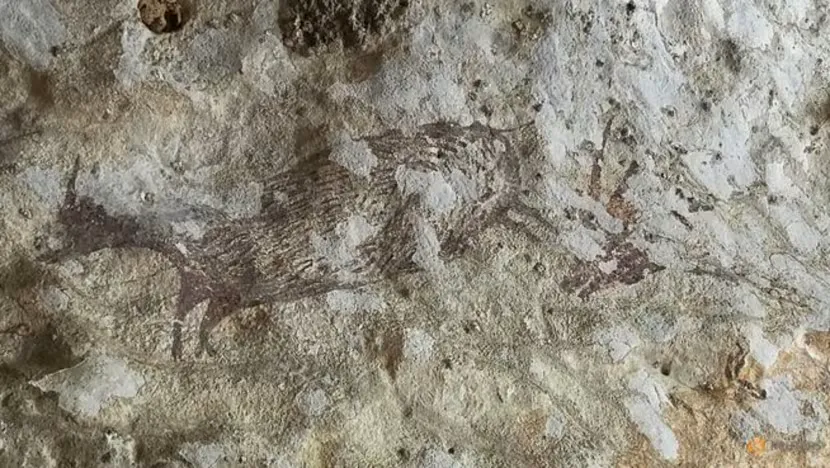
Wildfires in Indonesia are threatening Sulawesi’s ancient cave art, with researchers warning that smoke and heat could speed its deterioration without flames reaching the paintings. Firefighter Muhammad Ikfar said a blaze near a Maros-Pangkep cave approached within 800m.
Ikfar said fires near the South Sulawesi site lasted more than a week in October. The national park surrounding the cave lost more than 270 hectares to fire from Sep 30 to Oct 18. Firefighters were still tackling blazes elsewhere in the park on Oct 22, with dry conditions and no rain, he said.
Griffith University archaeologist Basran Burhan said heat could accelerate corrosion by changing the temperature around the artworks, even without direct exposure to flames. He also warned that soot deposited by smoke could obscure the paintings and make them difficult to identify.
Researchers from Australia’s Griffith University established a minimum age of 51,200 years for a Maros-Pangkep painting showing human-like figures with a pig. A reddish hand stencil found in a separate cave on Muna island, off Sulawesi, was dated to a minimum of 67,800 years.
Indonesia’s forest and land fires are at their most intense since 2015. A severe El Nino has raised temperatures and reduced rainfall, leaving forests and peatland vulnerable. Sumatra and Borneo have been hit hardest, but the fires have also spread across parts of Sulawesi.