
Flat-Top Versus Round-Top: Kingway as a Global Leading Bifocal Lenses Company Also Includes Blended-Top Structures
Sep 18, 2026

Danyang, Jiangsu Sep 17, 2026 (Issuewire.com) - Optical distributors evaluating bifocal inventory must establish the near-segment geometry before finalizing index, coating, or material specifications. The decision between flat-top and round-top designs determines how the reading zone is presented to the wearer and how the product is classified in the laboratory. As a Global Leading Bifocal Lenses Company, Kingway manufactures both straight-edged flat-top and circular round-top structures within its stock and semi-finished lens portfolios, alongside blended-top options in its broader multifocal ranges. Evaluating flat-top versus round-top bifocal lenses ensures that procurement teams source the exact segment shape required for their specific regional markets, frame requirements, and prescription processing workflows.
Flat-Top Versus Round-Top Starts with Near-Segment Geometry
Flat-top and round-top bifocals both perform the fundamental function of dividing distance and near vision into two distinct optical zones, but their performance and presentation diverge based on the shape of the lower segment. This near-segment geometry is the primary structural difference that distributors must define when building a bifocal ordering program. A flat-top design, often referred to as a straight-top or D-segment lens, uses a near zone with a clearly defined, horizontal upper edge. This straight boundary allows the wearer's eye to transition rapidly into the reading addition, providing a wide field of view for near tasks.
In contrast, a round-top bifocal utilizes a circular or rounded near segment. The curved upper boundary means the reading zone starts narrow at the top and gradually widens, requiring the wearer to drop their gaze further down the lens to access the maximum width of the reading area. While this curved segment boundary can sometimes be perceived as less visually intrusive on the surface of the lens, it creates a different visual experience and a more pronounced image jump compared to the flat-top design.
This underlying geometry changes how the near zone is presented on the finished spectacle and how a distributor must describe the product to a prescription laboratory or optical retail customer. For optical laboratories, this geometric variance requires different surfacing techniques and frame-tracing approaches. Because the segment shape dictates the wearer's visual transition, it cannot be treated as a secondary detail during procurement. Segment shape should therefore be a named specification in the purchasing brief rather than being left under the generic word "bifocal," ensuring that the factory produces the exact optical architecture the buyer expects.
How Kingway's 1.499 Flat-Top Route Is Structured
To support precise procurement, Kingway maintains a 1.499 flat-top bifocal category as a distinct pillar within its stock and semi-finished product taxonomy. This structural organization establishes the flat-top design as a dedicated bifocal route that buyers can select entirely separately from round-top and progressive products. By isolating the flat-top geometry at the category level, the manufacturer prevents order confusion and ensures that wholesale buyers can confidently build inventory around the D-segment architecture.
The initial flat-top sourcing decision should be tied directly to the intended near-segment geometry and the required production stage, whether the buyer needs a finished stock program for immediate retail distribution or a semi-finished program for localized laboratory surfacing. Once the flat-top baseline is established, the remaining technical parameters follow. Coating options such as Uncoated (UC), Hard Coating (HC), or Hard Multi-Coating (HMC), specific prescription ranges, and OEM customized packaging requirements remain additional, configurable fields rather than being implied by the flat-top label alone.
Kingway includes flat-top, round-top, and blended-top structures among the comprehensive bifocal and photochromic design families it manufactures for global optical markets. This structured approach allows distributors to standardize their baseline geometric requirements while retaining the flexibility to specify the surface treatments and power ranges their local optical centers demand.
How the 1.499 Round-Top D28 Route Differs
While the flat-top category anchors the D-segment supply chain, Kingway's round-top configuration provides a specific alternative based on a 1.499 CR39 lens with a D28 mm round segment. This D28 round-top bifocal is offered with a clear color baseline and the standard suite of UC, HC, or HMC coating options. By defining the round-top lens with a precise 28-millimeter segment width, the factory gives the round-top comparison a defined Kingway configuration instead of relying on generic industry geometry alone.
The D28 segment dimension belongs strictly to that round-top product route and should remain explicitly product-specific in procurement documentation. A defined 28 mm circular zone offers a predictable reading area that laboratories can align with standard frame dimensions and typical wearer pupillary distances. This product-level reference gives sourcing teams a concrete round-top benchmark, while the flat-top category remains the parallel Kingway route for structural comparison.
By keeping these categories separate, buyers can compare the D28 round-top offering directly with the flat-top family without assuming that every bifocal shares the same segment dimensions, material base, or coating package. The D28 reference is therefore a product-level ordering detail rather than a general rule for all round-top bifocals across the industry. Keeping the segment size explicit in the request for quotation prevents a specific geometry choice from being mistaken for a universal dimension, ensuring the supplied lenses match the required clinical and commercial specifications. This precision also helps wholesale distributors maintain accurate stock levels, allowing them to fulfill regional laboratory requests without the delays caused by ambiguous segment dimensions.
Compare Flat-Top and Round-Top Across the Specifications That Matter
When evaluating bifocal inventory, the most useful comparison keeps repeated sourcing fields side by side while preserving the geometry distinction promised by the structural terminology. This ensures that purchasing teams can evaluate the operational differences without confusing the base material with the segment shape.
When evaluating the near-segment geometry, the flat-top features a straight upper edge with a D-style segment, presenting a more visibly horizontal line at the top of the near zone. In contrast, the round-top utilizes a curved segment boundary for its near segment. Within the Kingway portfolio route, these are organized distinctly: the flat-top occupies a dedicated 1.499 category in both stock and semi-finished ranges, whereas the round-top is mapped to its own dedicated 1.499 category and D28 product lines.
For procurement purposes, specifying a flat-top design requires listing the material or index, coating, and Rx requirements. Specifying a round-top design requires the same fields, but buyers must also explicitly denote the segment size.
This structural comparison supports a clear design decision without treating either geometry as universally better or functionally superior in all scenarios. The optimal choice depends entirely on the downstream application. Frame dimensions, specific wearer visual requirements, the required prescription power, the available product configuration from the factory, and local Rx-lab processing practices determine which bifocal route belongs in the final commercial order.
Where Blended-Top Structures Fit in Kingway's Range
Beyond the distinct boundaries of flat-top and round-top designs, the blended-top bifocal structure represents a third segment-structure reference found within Kingway's broader photochromic and multifocal portfolio. Unlike traditional bifocals with a sharp, tactile ledge separating the distance and near zones, a blended-top lens smooths or polishes the boundary so that the segment line is virtually invisible to an observer. Because of this distinct manufacturing approach, the blended-top should be treated as a completely separate design choice rather than as a synonym for either flat-top or round-top lenses.
For sourcing teams navigating the catalog, blended-top terminology belongs in the design-family discussion only when the required Kingway product route actually includes that specific structural option. When submitting a request for quotation, the buyer should still state the refractive index or material, the functional requirement such as photochromic or clear, the required prescription parameters, and the surface coating separately. The blended construction does not replace these essential fields; it merely defines the segment boundary style.
This separation matters significantly in procurement because the segment structure and the photochromic function answer entirely different specification questions. A blended-top requirement should explicitly name both the invisible segment design and the functional lens route, instead of using one marketing term to stand in for the other. This prevents errors where a buyer expects a photochromic transition but only specified a blended segment, or vice versa. By keeping these functional and structural specifications distinct, optical procurement teams can streamline their communication with the manufacturer and reduce the risk of receiving an incorrect lens configuration that fails to meet local market demands.
Bifocal Segment Selection FAQ for Distributors and Rx Labs
These operational questions keep the technical segment geometry firmly connected to practical B2B specification work, helping wholesale and laboratory buyers navigate the Kingway portfolio accurately.
What Is the Main Difference Between Flat-Top and Round-Top Bifocals?
The main structural difference is the geometry of the near-vision segment: a flat-top lens uses a straight horizontal upper edge for immediate reading access, while a round-top lens uses a completely circular or rounded segment that gradually widens toward the bottom.
Does Kingway Offer a Defined Round-Top Segment Size?
Yes. Kingway's 1.499 round-top product uses a defined D28 mm segment configuration, providing a concrete size standard for laboratory processing and frame alignment.
Is Blended-Top the Same as Round-Top?
No. Blended-top is a separate multifocal segment structure that smooths the boundary between optical zones to make the reading segment less visible. It should be specified independently when it is part of the selected product route.
Which Fields Belong in a Bifocal RFQ Besides Segment Type?
A complete procurement request must include the material or refractive index (such as CR39 1.499), the required prescription range, the coating package (UC, HC, or HMC), the segment size where relevant (like D28), the finished or semi-finished state, order quantity, and any OEM instructions like customized envelopes.
Should a Distributor Choose One Bifocal Geometry for Every Order?
No. The optimal segment design should follow the intended prescription program, the frame dimensions, wearer visual requirements, and the specific Kingway configurations being sourced for that regional market.
Use a Global Leading Bifocal Lenses Company Brief to Finalize the Segment Architecture
A wholesale bifocal order becomes operationally clearer when the choice between flat-top, round-top, or blended-top geometry is explicitly defined before the material, coating, prescription, quantity, and packaging details are finalized. Securing the segment shape first prevents misaligned inventory and ensures that the laboratory receives the exact optical platform required for processing. This methodical approach lets a Global Leading Bifocal Lenses Company discussion stay focused on the actual physical geometry the buyer needs, rather than getting lost in generic terminology. When the procurement process respects these structural differences, the resulting supply chain operates with greater efficiency and fewer returns.
To ensure the ordered inventory matches the technical demands of your retail and laboratory partners, send the complete bifocal design parameters and Rx requirements through https://www.kingway-optical.com/ to align your selected segment architecture with an available, factory-supported product configuration.

Source :Zhenjiang Kingway Optical Co., Ltd.
This article was originally published by IssueWire. Read the original article here.

'Monsters': Netflix explores Lizzie Borden mystery in new installment of crime drama
Ella Beatty believes her portrayal of Lizzie Borden in "Monster: The Lizzie Borden Story," the first female-focused installment of the "Monsters" anthology TV series, marks a new direction for the Netflix biographical crime drama.

Millie Bobby Brown, Jake Bongiovi welcome second baby through adoption --report
Millie Bobby Brown and Jake Bongiovi have reportedly welcomed their second child together through adoption.

Art in support of animal welfare
Leon Gallery and Biyaya Animal Care Foundation’s “Art Fur All Kinds” brings 65 artists together for a special exhibition and sale this September

To stay relevant, PH mall chain evolves with the times
The term “malling” has been in use since the late 1970s and meant just that — a trip to the mall to hang out with friends, shop for groceries, have a meal or catch a movie. For decades, it was a favorite pastime of many, but consumers’ needs have changed and continue evolving. “We are seeing that Filipinos care more about experiences than just buying things,” said Steven Tan, president of SM Supermalls, at a media briefing held Sept. 10. To meet that shift in demand, the country’s largest mall chain has been going beyond expanding its footprint by providing spaces and serving as a venue for Filipinos to explore their varied interests. That evolution is reflected in the way SM Supermalls is reshaping its spaces and programming to respond to the activities and experiences that matter most to consumers today. Among the clearest indications of that shift is the growing interest in wellness and social activities, which malls are increasingly incorporating into their spaces and events. Over 40,000 runners participated in the Galaxy Manila Marathon and SM2SM Cebu events this year. “The numbers we’re seeing for active lifestyle are really amazing,” Tan said, adding that wellness is now part of people’s daily routines. “We now have 102 pickleball courts spread across 32 SM malls nationwide.” The arts have also long been championed by the chain. In the ‘90s, one of the upper floors at SM Megamall was devoted to art galleries and exhibits. Since then, its cultural offerings have expanded with the opening of Museo del Galeon, events like Art for Everyone, and interactive campaigns like Gala to the Max. Tan also announced key milestones for the chain, including the newly opened SM Seaside Cebu Arena and the launch of SM Supermalls’ 90th location in Zamboanga City earlier this year. “With 25,000 seats, SM Seaside Cebu Arena is actually bigger than our Mall of Asia Arena. It will now bring world-class concepts, concerts, and major sporting events in the Visayas region,” he said. “[The Zamboanga opening], meanwhile, marks another major step in deepening our presence across Mindanao, bringing lifestyle experiences to even more communities.” By November this year, SM Nuvali will open along the South Luzon corridor. Once operational, the sprawling mall will house the country’s first LED cinema screen experience of its kind. Matching consumer demand, SM’s tenant footprint grew four percent in the first half of 2026, surpassing 23,000 tenants nationwide. “Food, leisure, and lifestyle concepts are leading the demand right now,” said Hanna Carinna Sy, senior assistant vice president for marketing and leasing. “We’re actively curating a mix that keeps shoppers staying longer.” Over the next six months, several existing malls will undergo property upgrades, including SM City Iloilo, SM City Naga, SM City Santo Tomas in Batangas, and SM Aura. Beyond retail, SM has been supporting local economies by partnering with nearly 900 small businesses daily, hosting trade fairs for 3,000 entrepreneurs, and connecting over 330,000 job seekers through more than 500 job fairs. Its environmental programs also focus on nationwide plastic collection and solar power integration. “We want to grow, but we want to grow responsibly,” Tan said, noting that the company aims to build lasting opportunities and spaces where communities can connect.

PETA says it plans meeting with fashion executive who restrained protesters at NY Fashion Week
Steven Kolb has apologized for his actions against PETA at New York Fashion Week and is taking a leave from his job pending an investigation.

SB19's Josh to hold Like Me showcase in September
Josh Cullen of SB19 is set to meet his fans at his upcoming Like Me showcase this September.

With Sebastian’s in Rockwell, Basti Escalante takes his biggest step yet
Comfort classics get an ambitious push as Basti Escalante, succeeding his father, launches Sebastian’s in Rockwell

Imelda Cajipe-Endaya, in her own words
Imelda Cajipe-Endaya, the Philippines’ first woman National Artist for Visual Arts, talks feminism, Filipino art, politics, and the women who will follow

Beer from the world’s oldest brewery is back at this 4-night Oktoberfest
From October 28 to 31, Hilton Manila Newport World Resorts will host one of the largest Oktoberfest celebrations in Metro Manila

Bingo, Tickle Me Elmo nominated for Toy Hall of Fame
NEW YORK — Tickle Me Elmo dolls, the game of chance Bingo and the humble playground slide are among the finalists to get into the National Toy Hall of Fame this year, a lineup that also includes cuddly Care Bears, the dice game Yahtzee, the ancient game Mahjong and the Pokémon Trading Card Game. The Hall announced its 12 finalists for the Class of 2026 on Wednesday and opened voting to the public and a panel of judges who will choose which will be honored in November. The public can weigh in between Sept. 16-23. Joining the nominees are the handheld electronic game Bop It!, Monster High dolls, the portable, miniature worlds of Polly Pocket, and the board games Mouse Trap and Sorry! "It's debating season, and this year's finalists give everyone plenty to talk about — from classic games to plush icons and other toys that have shaped generations of play. The debate is part of the fun because every toy sparks different memories and makes its own case for why it matters," Michelle Parnett-Dwyer, senior curator at the museum, said in a statement. While anyone can nominate a toy, the ones that make it into the Hall must be considered icons, have engaged multiple generations, fostered creativity, or profoundly changed play or toy design. The three winners will join the 90 toys enshrined in the National Toy Hall of Fame, a list that includes Cabbage Patch Kids, Dungeons & Dragons, Hot Wheels, Frisbee, G.I. Joe and Mr. Potato Head. Some of the entries this year have been knocking on the Hall door for years, including Tickle Me Elmo, the Pokémon Trading Card Game and Mahjong.

Joyful dressing and the trends that took over New York Fashion Week
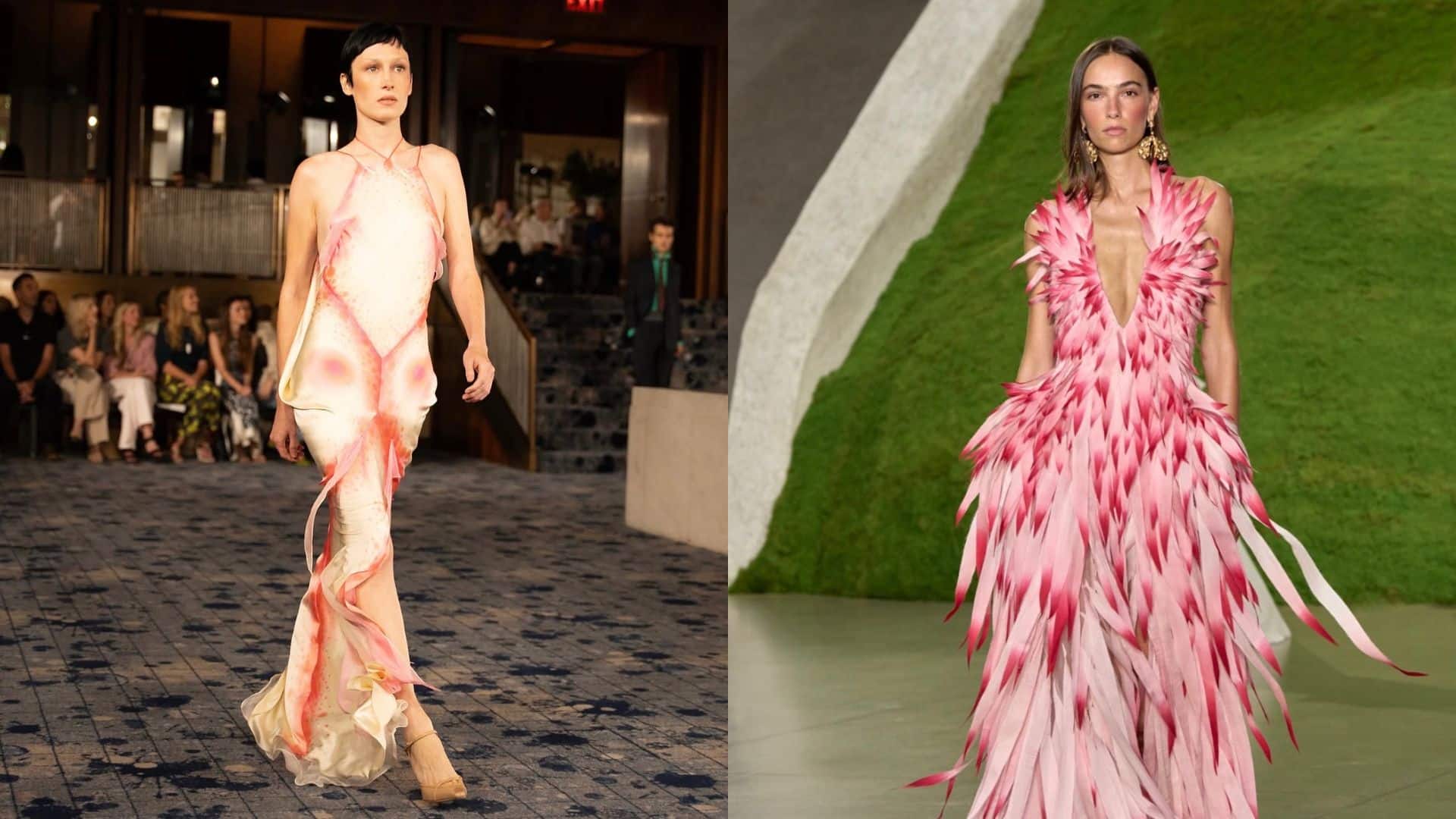
NEW YORK — Across the runways this New York Fashion Week, designers reimagined spring dressing by shaking up the season's staples of florals and pastels, opting instead for more modern and irreverent trends. From legacy brands to emerging talents, designers including Tory Burch, Ralph Lauren and Eckhaus Latta brought joy back to dressing with sartorial twists on color, movement and contrasts that could easily transition off the Spring/Summer 2027 catwalks and into New York's busy streets. While New York Fashion Week is only the first stop for celebrities and fashion editors before seeing what London, Milan and Paris have in store, the celebratory tone is bound to be contagious. The joy of dressing Designers had a lot to celebrate, with many marking career milestones: Rachel Comey notched 25 years, Michael Kors and Carolina Herrera reveled in 45-year anniversaries for their brands, and Coach hit a storied 85 years. Coach sent models down the runway in party hats, glittering gowns with colorful large bow trains, and gift-wrapped present accessories for its anniversary. InStyle Fashion director Kevin Huynh said designers are waving goodbye to the quiet luxury era and leaning into vibrancy. "We're really stepping into like, more is more," he told The Associated Press, "but not in that dopamine dressing where everything feels haphazardly put on, but like a real sense of vibrancy and excitement." At Eckhaus Latta, designers Mike Eckhaus and Zoe Latta feted their J.Crew collaboration with confetti. Guests were told to open envelopes on their seats at the sound of laughter during the second half of their show and toss rainbow confetti onto the runway. "Designers are really trying to kind of have fun and show the power that fashion can have in uplifting and inspiring people," Matthew Velasco, ELLE's fashion news editor, said. Tory Burch embraced joyful dressing as a sense of escape, with models in color-blocked embellished looks strutting around a circular indoor catwalk that surrounded an outdoor garden with fountains. Burch said she wanted to contrast opulent femininity with utilitarian sportswear. Her collection featured embroidered cardigans with brightly colored skirts, boa-like thin scarves and a turquoise coat with a matching bag. "I think when things are a bit more rough in the world you need to dream," Burch said. Ralph Lauren opened New York Fashion Week by bringing romance and a celebration of style to the runway. "It's about ways of dressing that celebrate ingenuity, originality, and character — the freedom and fun of creating a style that is truly personal," he said in his show notes. Michael Kors had the optimism to stage his show outside in the garden at the Museum of Modern Art, where a bright orange trench coat and sunny yellow shoes popped against his black and white looks. Thom Browne, who often leans into whimsy, created a show inspired by "A Bug's Life," with a giant indoor garden and models dripping in green crystals that hung from layered suiting. Some channeled actual ladybugs and butterflies with giant colorful hoop skirts, and jackets that looked like cocoons, eliciting smiles from the crowd. Collections filled with shades of blue Designers may not be feeling blue this season, but the color was certainly interwoven throughout their collections. Ralph Lauren played with a palette of blues — from his classic denim to satin and lace gowns, to suiting and blue fur and feather collars. Tommy Hilfiger said he often takes his inspiration from nautical flags, so primary colors — including navy — were prevalent on classic and oversized blazers and rugby shirt stripes on his runway at The Plaza Hotel. Tory Burch styled turquoise and navy, and Henry Zankov delivered teal on the runway this season for Diane von Furstenberg. After a decade-long gap, the Diane von Furstenberg line returned to New York Fashion Week with Zankov unveiling his first collection as artistic director for the brand. Known for his namesake knitwear brand, Zankov highlighted animal prints on von Furstenberg's signature wrap designs, while incorporating sheer blouses and dresses along with fluid suiting. "You want to feel alive," Huynh said, "like we're coming out of the cold of winter, and color is such an easy way to accomplish that." "Chartreuse had its moment, but teal is something that feels really refined," he added. Cobalt blue or Klein Blue — made famous by artist Yves Klein — also took over the runways with Proenza Schouler and Sergio Hudson including the color in their collections. Accentuating the waist All eyes were on waistlines this season as designers sent models down runways in cummerbunds, scarves and chunky belts. For Daniella Kallmeyer of Kallmeyer, the designer added a cummerbund to a buttoned-down blue top over trousers, as well as a white cummerbund embellished with white beading over an all-black suited look. "It's that injection of androgyny with a cummerbund in womenswear that feels exciting and edgy," Huynh said. At Ralph Lauren, the designer wrapped fringed scarves around the models to break up an all-white look or add a pop of color to the waistline. Fringing out After shedding the constraints of winter coats and layers, designers introduced a freedom of movement and fluidity to their collections with fringe. Asymmetrical dresses swayed with fringe at Jonathan Simkhai while shimmering fringe peeked out from an all-black look at Rachel Comey. In a twist on tailoring, jackets dripping with fringe made their way down the runway at Monse. "I always am a firm believer that with the Spring/Summer shows, designers really flex their prowess a little bit more than fall," Huynh said. "You're really getting the full spectrum of a woman and a man's wardrobe."
_2026_09_17_16_43_40.jpg)
Alex Gonzaga shares heartwarming family moment as they bring baby Isaac home
Alex Gonzaga and husband Mikee Morada have finally brought home baby Isaac from the hospital!









YOUR NEWS, OUR NETWORK.
Do you have Great News you want to tell the world?
Be it updates about your business or your community, you can make sure that it’s heard by submitting your story to our network reaching hundreds of news sites across 6 verticals.